NSAA 2018 Section 1, Part D (Biology questions) · interactive paper
Paper snapshot
18
Questions
18
Worked solutions
6
Chapters covered
University Admissions Tests UK (UAT-UK, Pearson VUE) · United Kingdom
NSAA 2018 Section 1, Part D (Biology questions)
2018
40 minutes
18 questions. Each part is annotated: check the hint if you are stuck, or reveal the worked solution once you have committed to an approach.
PART D Biology
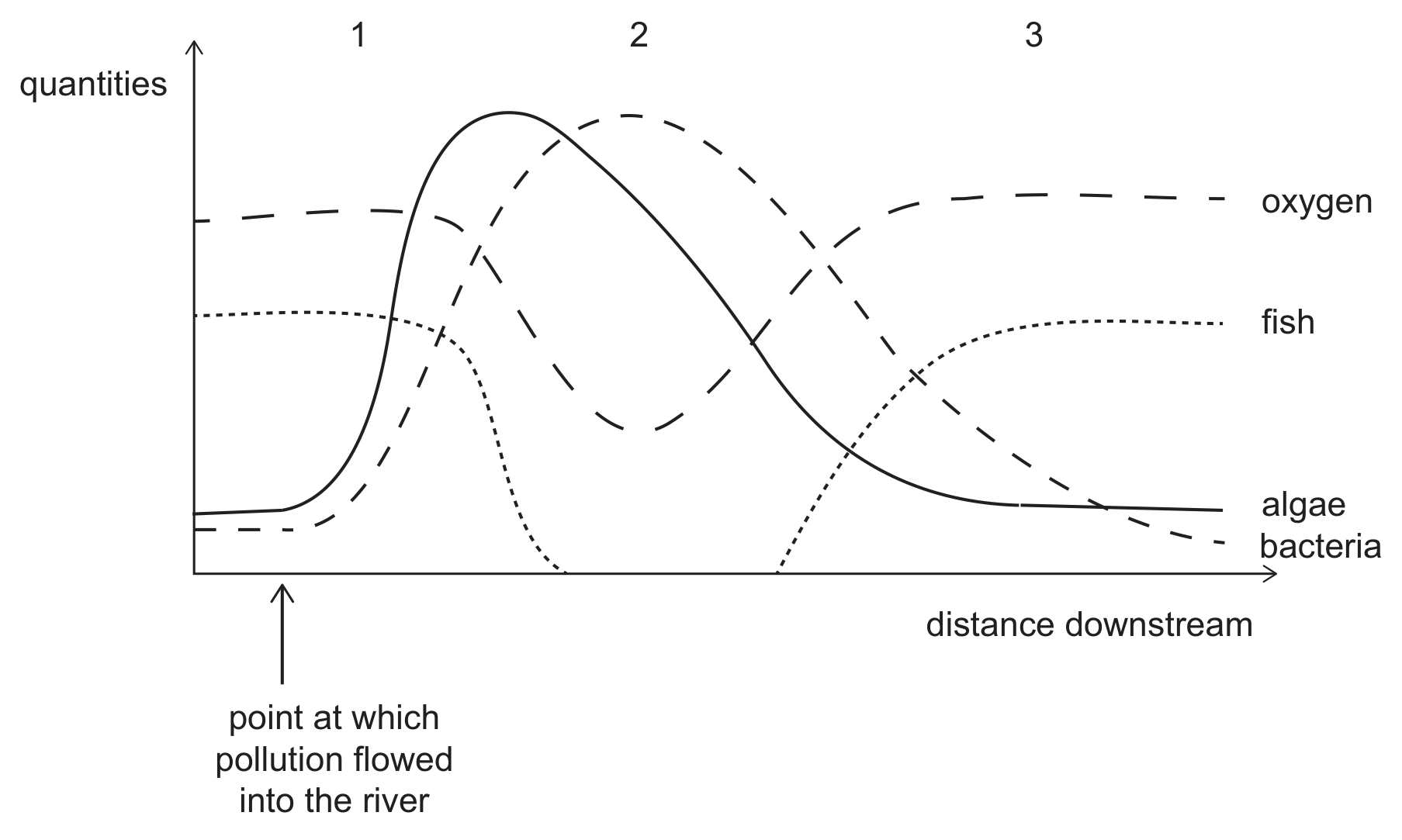
The graph shows how four variables change with the distance down a river, after a source of pollution flowed in.
Which indicator species could be expected to be found in large numbers at 1, 2 and 3?
(Each option gives the species at 1, then at 2, then at 3.)
Abloodworm; bloodworm; bloodworm
Bbloodworm; bloodworm; stonefly
Cbloodworm; stonefly; bloodworm
Dbloodworm; stonefly; stonefly
Estonefly; bloodworm; bloodworm
Fstonefly; bloodworm; stonefly
Gstonefly; stonefly; bloodworm
Hstonefly; stonefly; stonefly
Ecology & Plant Physiology1 mark
Sickle cell anaemia is a recessive genetic condition that results in abnormally-shaped red blood cells due to the production of a faulty type of haemoglobin. Children born with sickle cell anaemia rarely live to adulthood without significant medical intervention. Carriers, who only have one copy of the sickle cell allele, have greater resistance to the disease malaria than people with two copies of the allele for normal functional haemoglobin.
Using this information, which of the following statements is/are correct?
1. People with sickle cell anaemia would have reduced anaerobic respiration in their muscle cells. 2. In areas with malaria the percentage of people surviving with sickle cell anaemia increases. 3. In parts of Africa where malaria is more common you would expect to find more people with a sickle cell allele.
Anone of them
B1 only
C2 only
D3 only
E1 and 2 only
F1 and 3 only
G2 and 3 only
H1, 2 and 3
Inheritance, Variation & Evolution1 mark
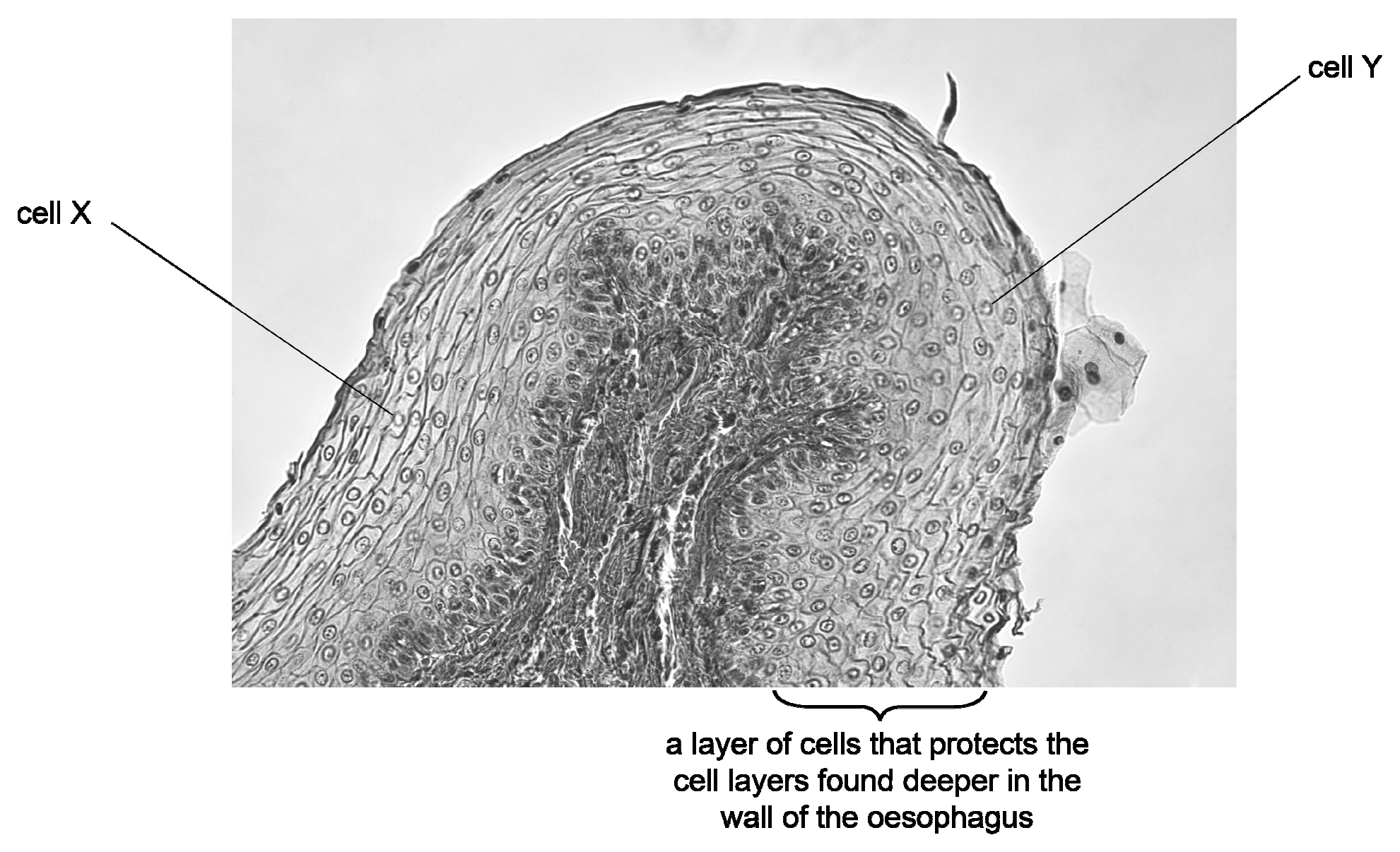
A student studied this photograph of part of an organ.
The student drew the following conclusions about the two cells labelled X and Y.
1. Both cells X and Y are found in the same tissue. 2. Both cells X and Y were produced by mitosis. 3. Both cells X and Y have a cell wall.
Which of these conclusions is/are correct?
Anone of them
B1 only
C2 only
D3 only
E1 and 2 only
F1 and 3 only
G2 and 3 only
H1, 2 and 3
Cells1 mark
A student investigated the tadpole population in a large pond.
A net with a rectangular opening measuring 0.1 m×0.2 m was swept through the water for a fixed distance of 1 m. This was repeated 10 times.
All the sweeps were made at the edge of the pond as the student had no waders or boat.
The number of tadpoles in each sweep was recorded in the table.sweep numbernumber of tadpoles12021233240546874889121020The student made the following statements.
1. Each sweep sampled 0.02 m3 of water. 2. The frequency of occurrence of the tadpoles was 90%. 3. An accurate estimate of the population size of tadpoles in the pond could be calculated using this data if the total volume of water was known.
Which of the statements about the investigation is/are correct?
Ecology & Plant Physiology1 mark
A breeding experiment was carried out using rats.
A pair of rats has eight offspring per litter. The offspring breed freely amongst each other within the same generation. Each female is only allowed to have one litter of eight.
The expected ratio of male to female offspring in this breeding population is the same in rats as in humans, and is seen in every generation.
In the 4th generation of offspring, how many individuals would be expected to have the XY genotype?
A16
B32
C64
D128
E256
F512
G1024
Inheritance, Variation & Evolution1 mark
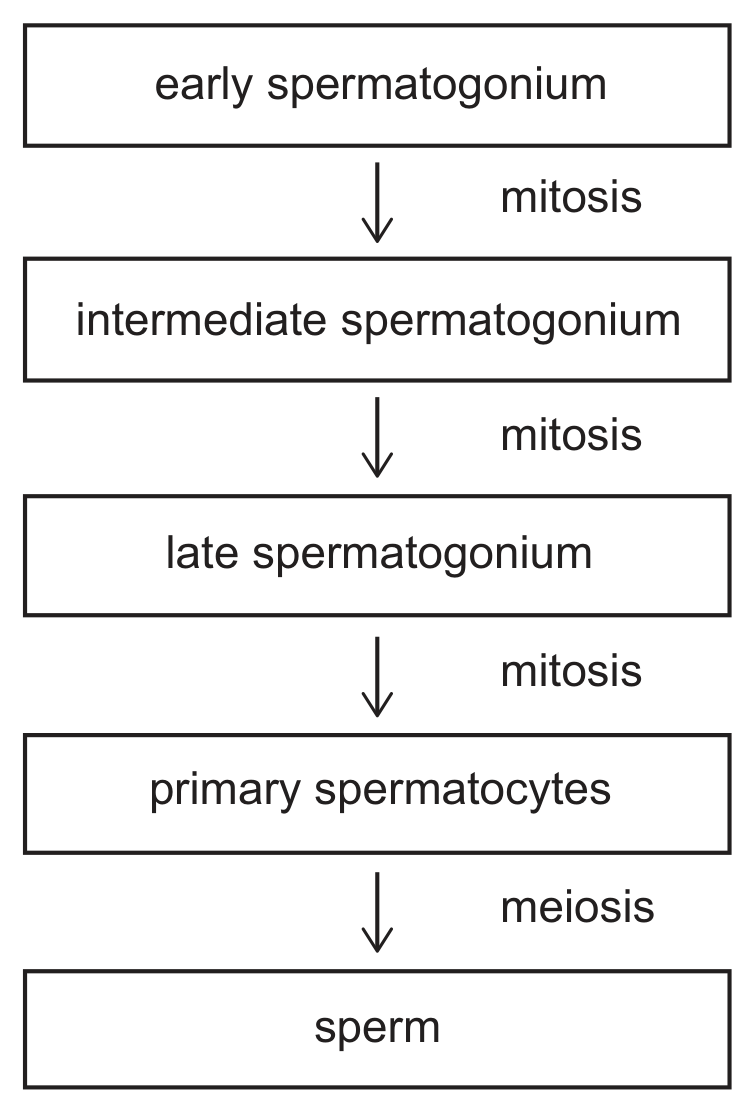
The diagram shows four steps in the process of human sperm production. For each step only one complete division takes place.
Assuming no mutations and that all of the cells survive, what will be the maximum number of haploid cells originating from a single early spermatogonium?
A1
B2
C8
D16
E32
F64
Membrane Transport, Cell Division & Reproduction1 mark
Which of the following conditions is/are required by the cells near the tip of a plant shoot in order for the tip to grow towards light from one direction?
1. sufficient glucose 2. uneven distribution of plant hormone 3. sufficient oxygen
Anone of them
B1 only
C2 only
D3 only
E1 and 2 only
F1 and 3 only
G2 and 3 only
H1, 2 and 3
Ecology & Plant Physiology1 mark
A cell from the epithelium of an animal was removed. The cytoplasm of this cell can be considered as a 2% sugar solution. The living cell was placed in a 4% sugar solution.
Which of the following statements is/are correct?
1. At equilibrium, the sugar concentration in the cell was 6%. 2. Water continued to move across the cell membrane after equilibrium was reached. 3. Osmosis was most rapid when the cell was first placed in the solution.
Anone of them
B1 only
C2 only
D3 only
E1 and 2 only
F1 and 3 only
G2 and 3 only
H1, 2 and 3
Membrane Transport, Cell Division & Reproduction1 mark
A piece of DNA is made up of two complementary strands, each 25 bases long.
14% of the bases are adenine.
Which two statements are correct?
1. Adenine and cytosine together make up 25 bases. 2. Adenine and guanine together make up 50% of the bases. 3. There are 14 thymine bases present. 4. 36 of the bases are guanine.
A1 and 2 only
B1 and 3 only
C1 and 4 only
D2 and 3 only
E2 and 4 only
F3 and 4 only
DNA, Protein Synthesis & Gene Technology1 mark
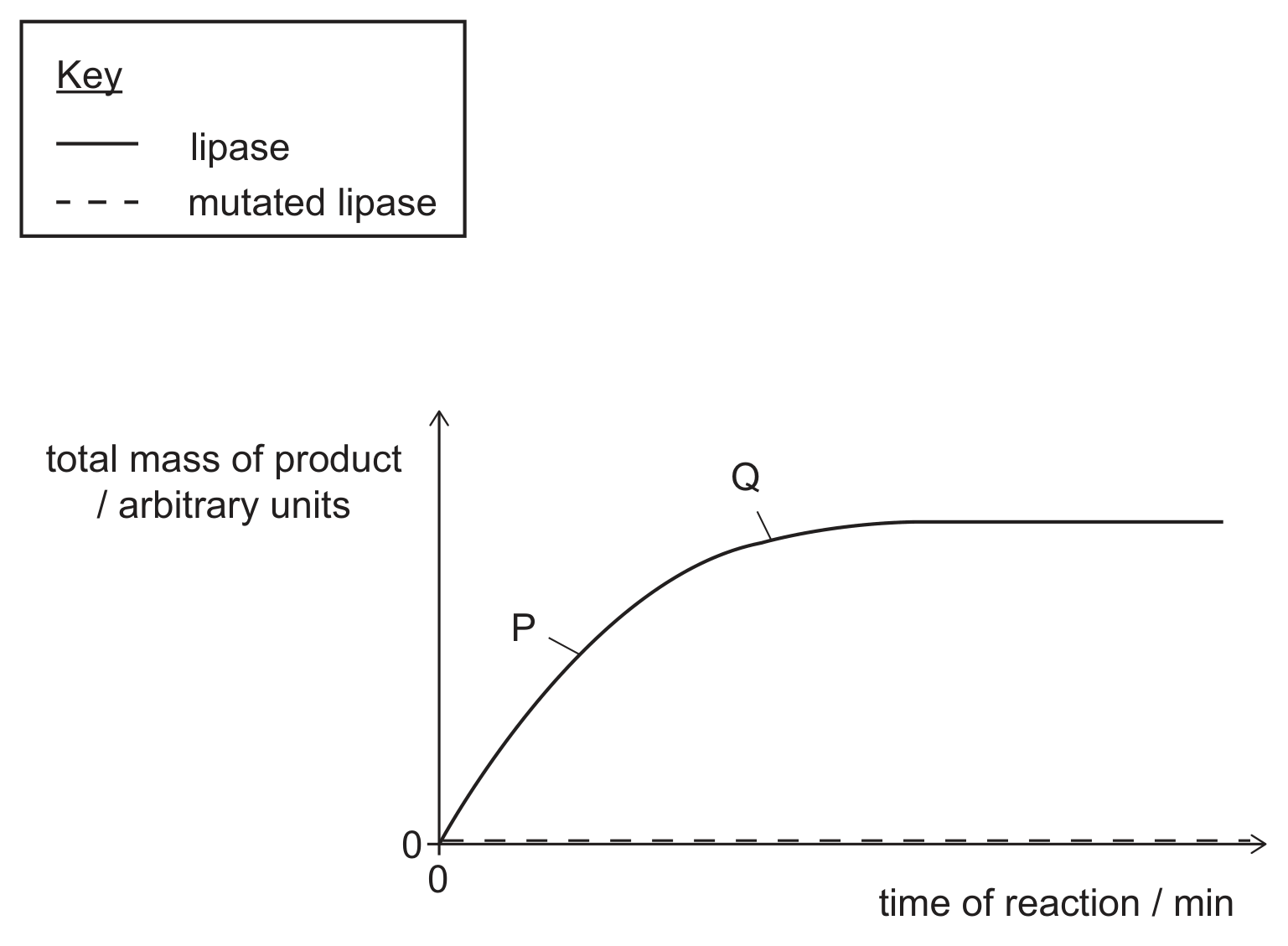
In a laboratory, the activity of two lipase enzymes on the same type of lipid was studied. One lipase enzyme was produced from a mutation in the gene that coded for the original enzyme. The mutation occurred in the sequence for three adjacent amino acids called serine, aspartic acid and histidine. The graph shows the results of this study.
Which of the following statements is/are correct?
1. The serine, aspartic acid and histidine amino acids could be in the active site of the enzyme. 2. All mutations affecting the region coding for serine, aspartic acid and histidine amino acids will be expected to have the same effect. 3. At point Q on the graph, the pH of the reaction mixture will be higher than at P.
Anone of them
B1 only
C2 only
D3 only
E1 and 2 only
F1 and 3 only
G2 and 3 only
H1, 2 and 3
Enzymes1 mark
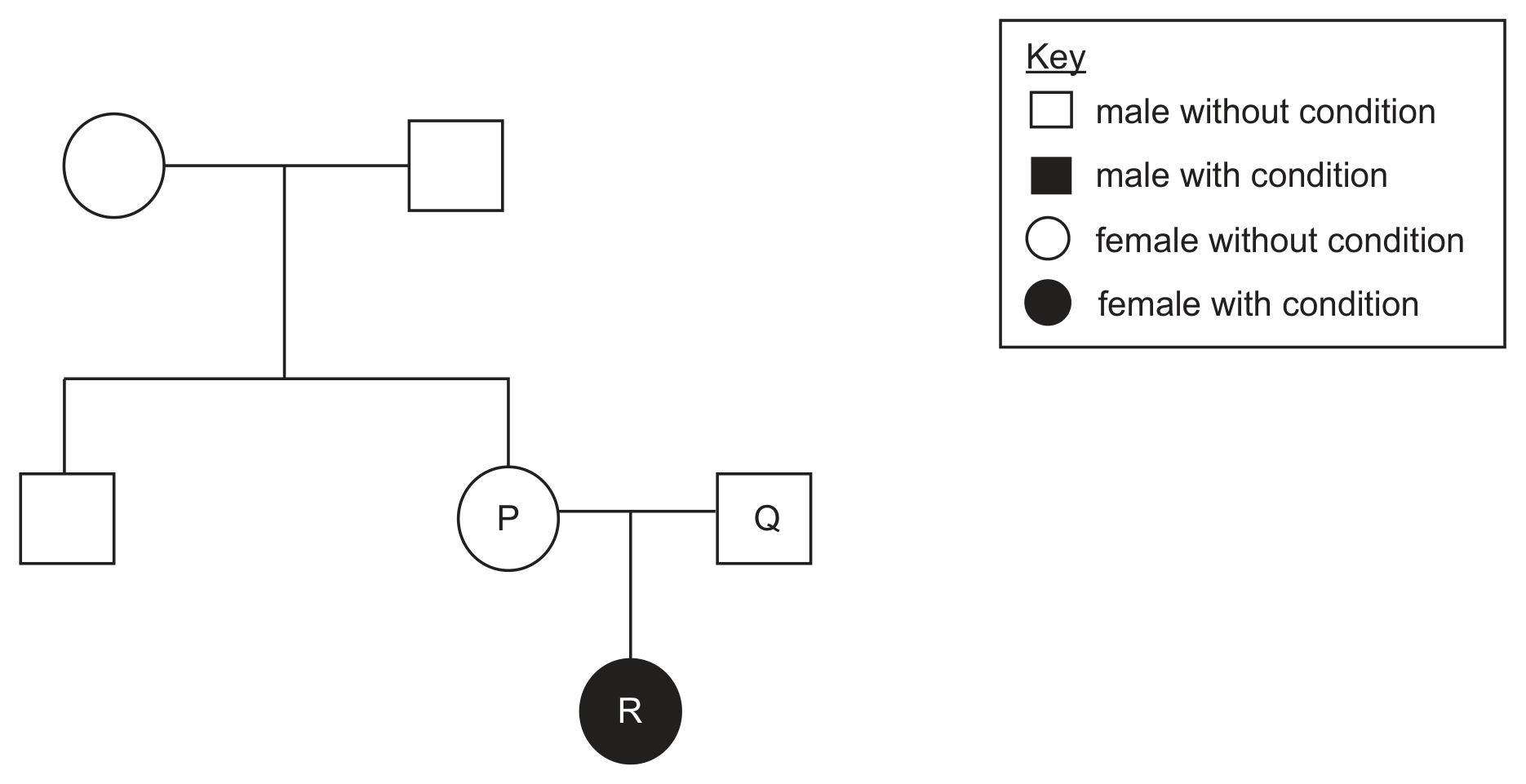
The family tree shows a family affected by a dominant genetic condition. All people who carry the mutation show symptoms of the condition.
Which of the following statements could explain the presence of the dominant condition in female R?
1. The mutation occurs in P. 2. The mutation occurs in Q's father. 3. The mutation occurs in R.
Anone of them
B1 only
C2 only
D3 only
E1 and 2 only
F1 and 3 only
G2 and 3 only
H1, 2 and 3
Inheritance, Variation & Evolution1 mark
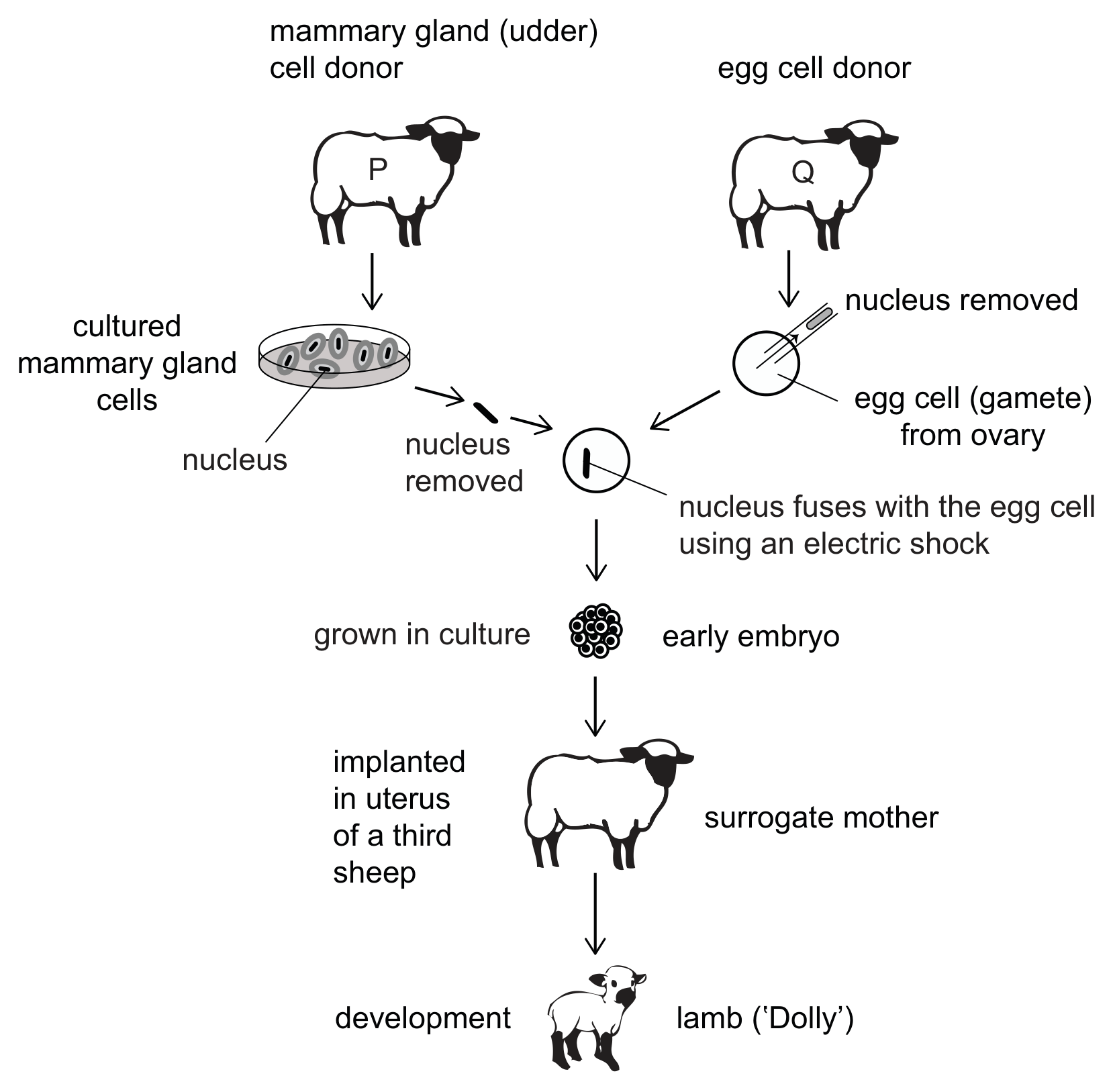
Dolly the sheep was born in 1996. She was unusual because she had no biological father.
The diagram shows how she was produced.
Which of the following processes had to occur to produce Dolly?
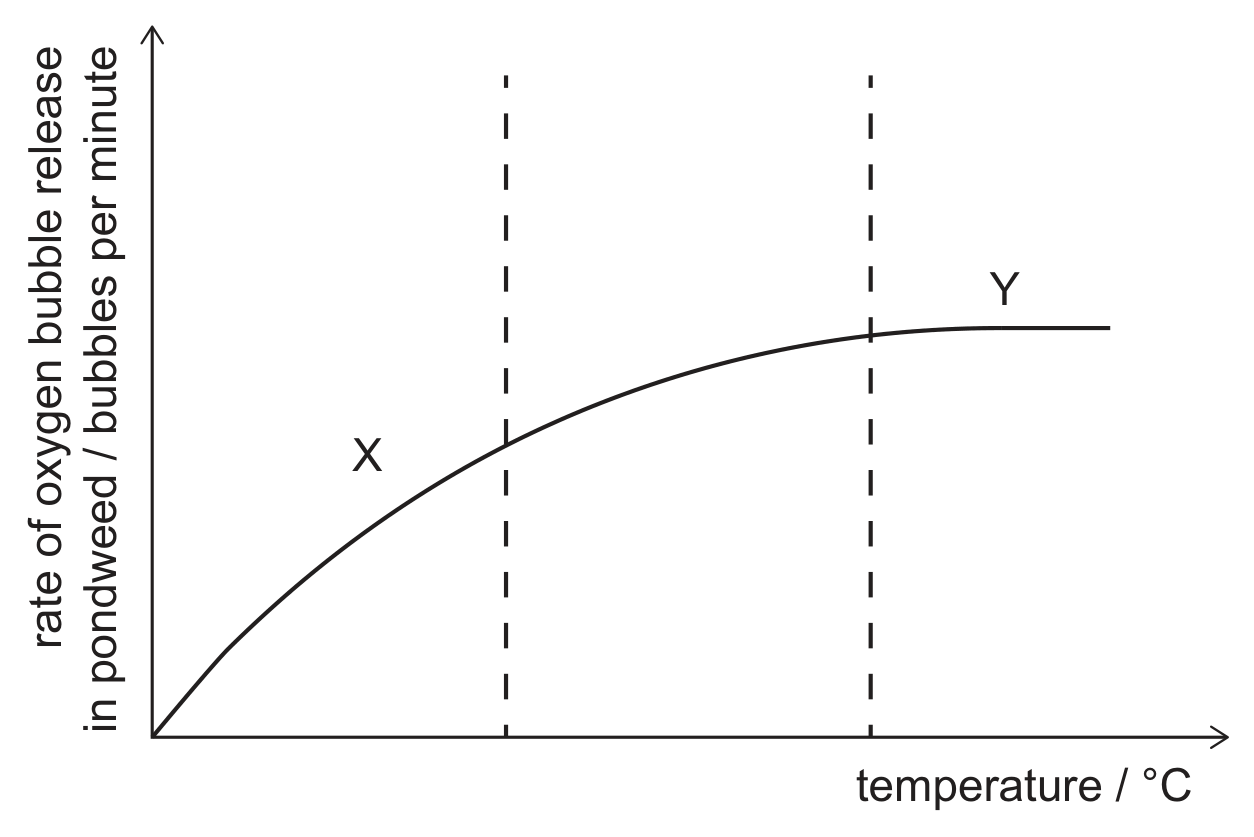
A student investigated the rate of oxygen bubble release from a pondweed plant at different temperatures. The rates are shown below, with two sections of the graph marked X and Y. In each investigation all other factors were kept constant.
Which of the following statements about sections X and Y is/are correct?
1. In section X, the kinetic energy of the reaction molecules is increasing with increasing temperature. 2. In section Y, temperature is the factor which limits that rate of oxygen production. 3. In section Y, the plant's enzymes may have denatured. 4. Section Y represents the plant's maximum possible rate of oxygen production under any conditions.
A1 only
B2 only
C3 only
D4 only
E1 and 2 only
F1 and 4 only
G2 and 3 only
H3 and 4 only
Ecology & Plant Physiology1 mark
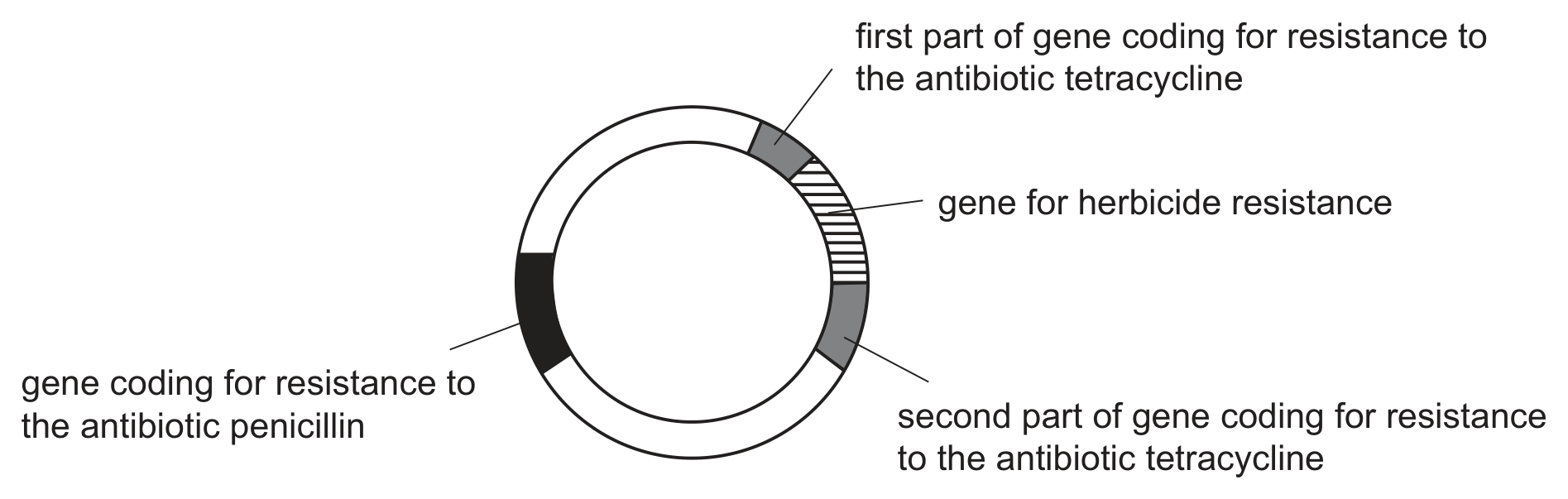
The diagram below shows a circular piece of bacterial DNA called a plasmid that has been made recombinant by the insertion of a plant gene for herbicide resistance.
Bacteria containing only the recombinant plasmid had to be identified from bacteria that contained only the original plasmid. The original plasmid contained a gene coding for resistance to the antibiotic penicillin and a gene coding for resistance to the antibiotic tetracycline.
These bacteria were grown on two sets of agar plates. One set used agar that contained the antibiotic penicillin and the other set used agar that contained the antibiotic tetracycline.
Which row in the table correctly shows the growth of these bacteria on the two sets of agar?
(Each option states whether bacteria containing only the recombinant plasmid grow on penicillin agar and on tetracycline agar, then the same for bacteria containing only the original plasmid.)
Arecombinant plasmid: penicillin yes, tetracycline yes; original plasmid: penicillin no, tetracycline no
Brecombinant plasmid: penicillin yes, tetracycline yes; original plasmid: penicillin yes, tetracycline no
Drecombinant plasmid: penicillin no, tetracycline no; original plasmid: penicillin yes, tetracycline yes
Erecombinant plasmid: penicillin yes, tetracycline yes; original plasmid: penicillin no, tetracycline yes
DNA, Protein Synthesis & Gene Technology1 mark
A student analysed a gene sequence that had been identified in four different types of organism. The gene codes for a functional protein. A section of the gene's DNA is shown below. The rest of the DNA from this gene (not shown) is identical in all four different types of organism. The table gives the six DNA triplets of this section for each organism.organismhumanoak treemushroomE. coli bacteriumtriplet 1ACGACGACGACGtriplet 2CCTGAAGAATACtriplet 3CGTTATCTCGATtriplet 4CACGTATTAGGGtriplet 5GCTGCTGCTGCTtriplet 6AAAAAAAAAAAAThe student then made the following conclusions:
1. This gene does not code for chlorophyll. 2. This gene may be found in the nucleus or cytoplasm. 3. The protein that this gene codes for is likely to be more similar in plants and fungi than in the other organisms.
Which of these conclusions is/are correct?
DNA, Protein Synthesis & Gene Technology1 mark
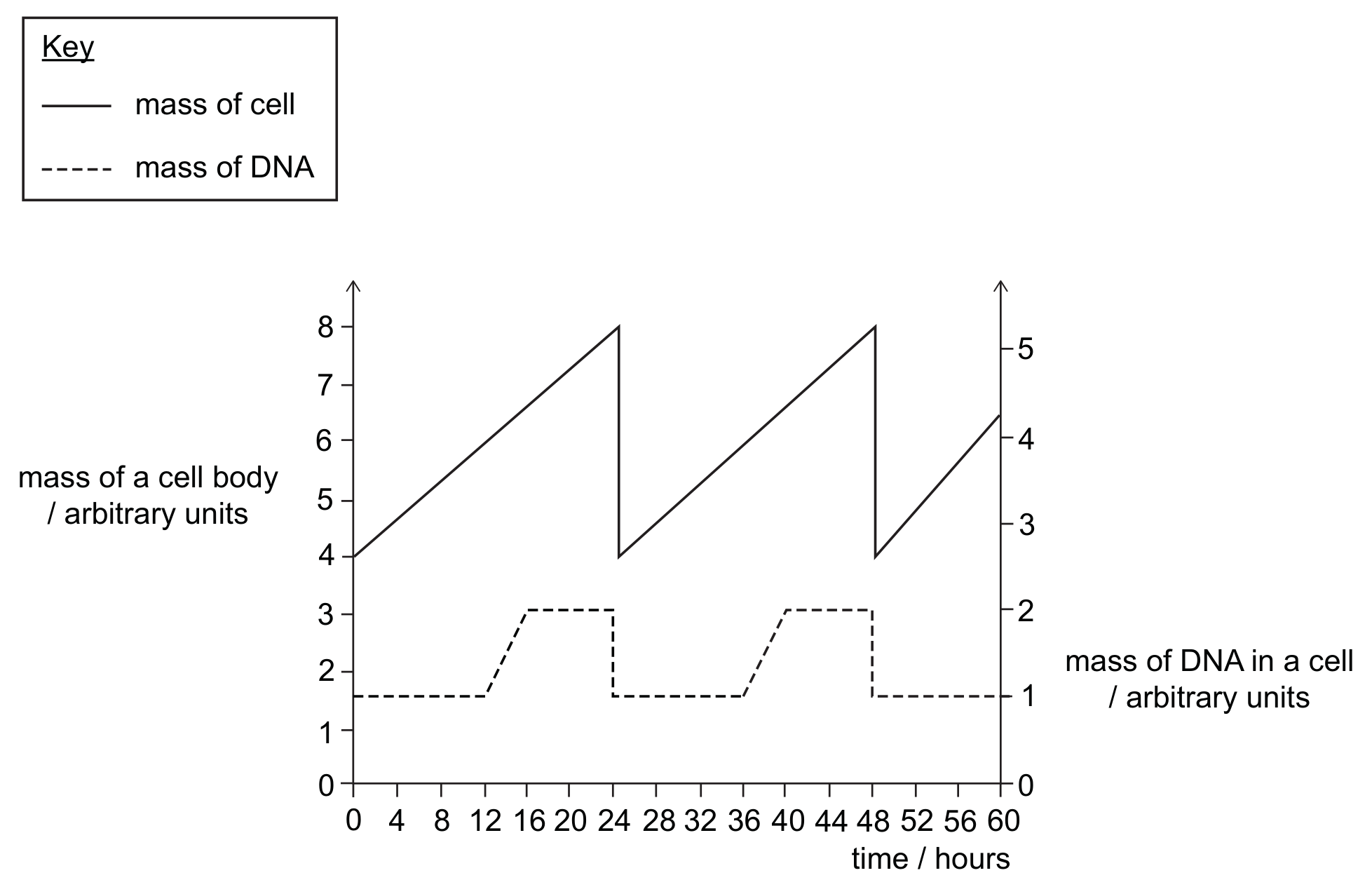
The graphs represent the changes in the mass of a healthy human body cell and in the mass of the DNA of that cell over time.
Using the graph, which of the following statements is/are correct?
1. Mitosis takes place at 12 and 36 hours. 2. The graph shows two cell divisions. 3. The next cell division should take place at 72 hours.
Anone of them
B1 only
C2 only
D3 only
E1 and 2 only
F1 and 3 only
G2 and 3 only
H1, 2 and 3
Membrane Transport, Cell Division & Reproduction1 mark
Bt pesticide is used by farmers to kill insect pests. However, widespread use has resulted in the evolution of resistance to this pesticide. A recessive allele causes resistance.
Scientists have suggested that in areas where the Bt pesticide is used, a small number of fields are left untreated. These untreated fields are known as refugia. This method has been shown to slow down evolution of resistance to the pesticide.
Which of the following statements explain why refugia could slow down the evolution of resistance to Bt pesticide?
1. When resistant insects breed with pesticide-sensitive insects that do not have the allele for resistance, the offspring produced will be sensitive to the pesticide. 2. When fewer insects are exposed to pesticide, fewer mutations occur that produce alleles for resistance. 3. The refugia help to maintain genetic variation in the population of insect pests.
Anone of them
B1 only
C2 only
D3 only
E1 and 2 only
F1 and 3 only
G2 and 3 only
H1, 2 and 3
Inheritance, Variation & Evolution1 mark
A diploid plant cell divides by mitosis.
After mitosis of this cell, a mutation occurs that changes the genotype of one of the daughter cells. This mutant daughter cell produces a non-functional enzyme instead of the functional enzyme produced by the other daughter cell. This mutation has no effect on the phenotype of the plant or the number or length of chromosomes in the plant cell.
Which of the following statements describe the daughter cells after the mutation has occurred?
1. The chromosomes in the nucleus of each daughter cell will contain the same genes. 2. Both daughter cells will contain the same alleles for every gene. 3. The sequence of bases along each allele will be the same in each daughter cell.
Anone of them
B1 only
C2 only
D3 only
E1 and 2 only
F1 and 3 only
G2 and 3 only
H1, 2 and 3
DNA, Protein Synthesis & Gene Technology1 mark
Anone of them
B1 only
C2 only
D3 only
E1 and 2 only
F1 and 3 only
G2 and 3 only
H1, 2 and 3
Frecombinant plasmid: penicillin no, tetracycline no; original plasmid: penicillin no, tetracycline no
Grecombinant plasmid: penicillin yes, tetracycline no; original plasmid: penicillin no, tetracycline yes